Build-Up Film Adhesive in Meeting the Challenges of the Communication and Reliability Challenges
Shear and Z-Axis Tensile Stress Management for Build-Up Substrates
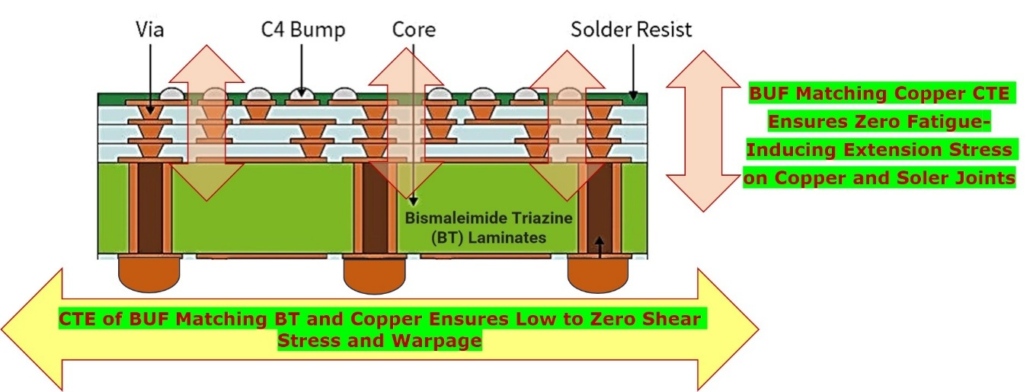
One of the challenges in dielectric film build-up on the BT and Laminate Core are to minimize the shear stress. BT and other core substrate typically have coefficient of thermal expansion (CTE) of 18 ppm/ºC while typical dielectric polymer has CTE around 60 ppm/ºC. Even with heavy silica filling, the first and even later generations of ABF have typical CTE above 30 ppm/ºC. More deviation from 18ppm/C will induce high shear stress and thus adversely affect the warpage and long-term reliability.
When more layer counts are used in the build-up substrate, the Z-axis expansion fatigue considerations for the copper lined vias an solder joints that have CTE around 18-24ppm/ºC becomes a challenge for the long-term reliability as well.
Thermal Dissipation Balancing Communication and Stress Management
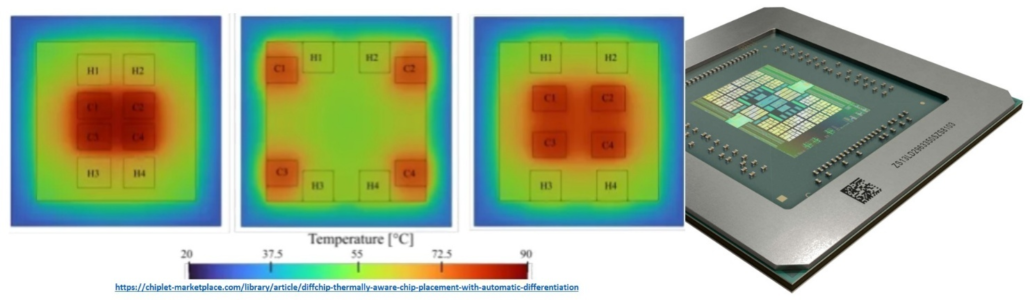
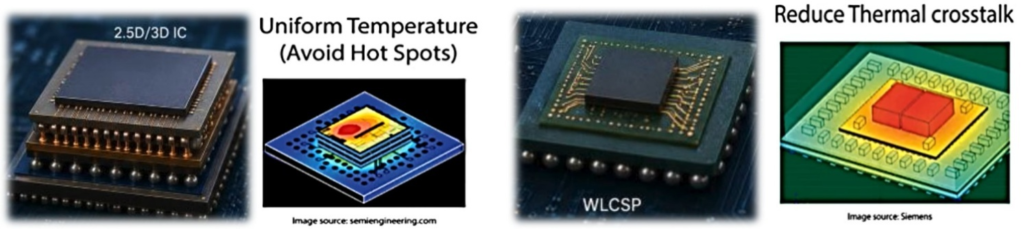
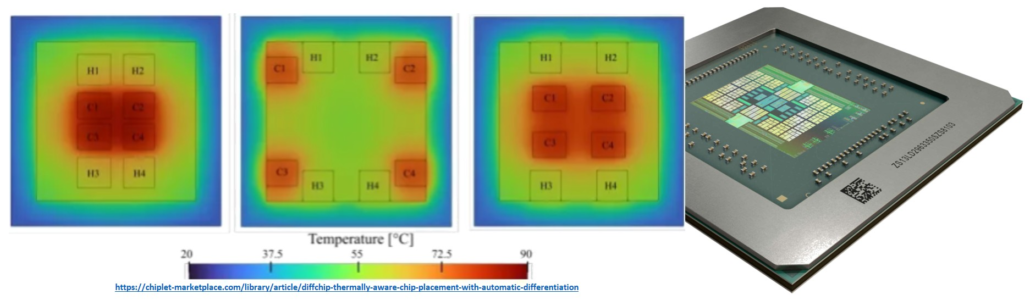
With the increase use of heterogenous integration, logic and processing chips are directly next to the lesser powered memory modules. More heat generated must be quickly dissipated across and through the build-up substrate. In providing the needy thermal dissipation, AIT with over 30 years of using diamond-based adhesive for supercomputers have developed the diamond filled build-up film dielectric adhesive to provide more than 8 W/mºK thermal dissipation capability. BUF7660 and BUF7880 are filled with nano-based and micron-based diamond crystallites to form BUF7669-NP and BUF7889-FP.
Increasing the thermal dissipation comes also the increase in dielectric constant. Thus, the choice in balance of data communication efficiency must be weighed and balanced with the heat dissipation during the build-up film substrate and packaging considerations.
Low Dielectric Constant and Loss for 5G-6G Devices
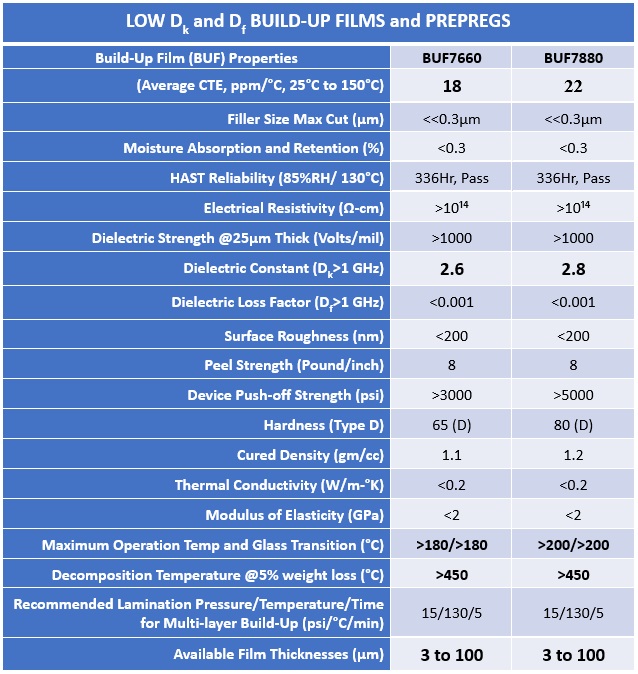
In meeting the fast communication speed for 5G and 6G modules, build-up substrates with or without core substrates are preferably with low dielectric constant and loss below 3.0 and 0.005 at the mmWave frequencies. This challenge can only be met with dielectric without the use of inorganic fillers such as silica to control the CTE for stress consideration. Through the use of novel molecularly structural engineering, AIT scientists have successfully created dielectric build-up adhesive film that matches the CTE of copper and BT core substrate at 18-22 ppm/ºC without using highly loaded silica. These high-temperature capable dielectric polymer adhesive films respond to mmWave frequency with low dielectric constant of 2.6-2.8 and less than 0.005 dielectric loss.
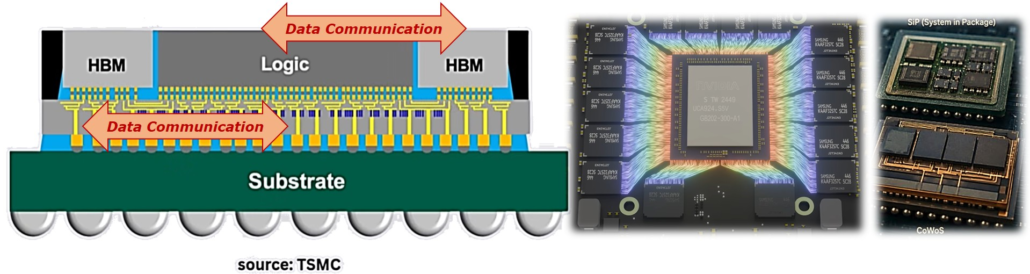
Coupling High Temperature Stability with High Glass Transition Temperature of >200ºC, and Low CTE of AIT Build-Up Films with 8-22 ppm/ºC Ensures Compatibility with Most Stringent Multilayer on Organic and Glass Core Substrate in Shear and Z-axis expansion stresses
Organic Core Substrate Based Build-Up Substrate Reaching Size Limitation without Low Stress CTE Matching Build-Up Dielectric Film
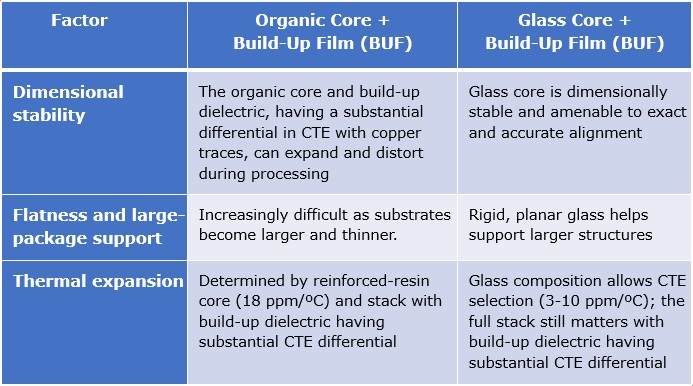
Organic fiber-glass reinforced core substrate is engineered to have XY-plane CTE to match the copper traces. As long as the build-up dielectric film matches the CTE closely, the overall device will have low shear stress and good reliability. When the chiplet module becomes sizable, the larger size with copper traces vias structure less symmetric, substrate warping may contribute to the shorten longevity of the packaged device.
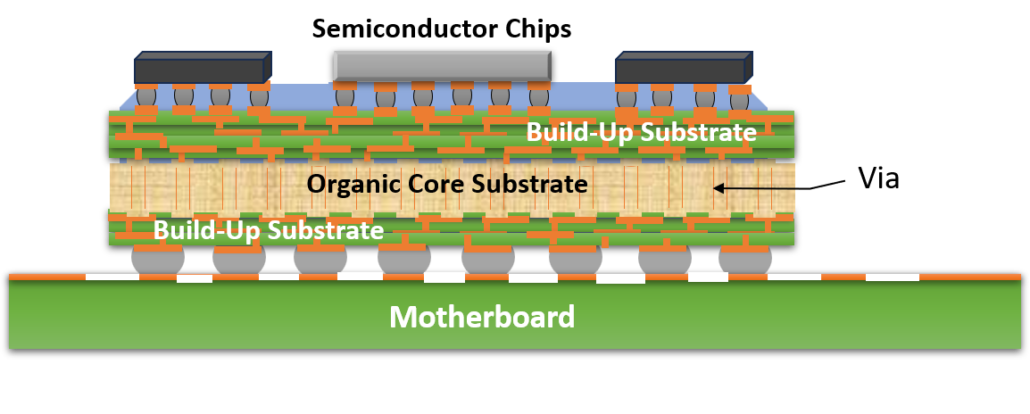
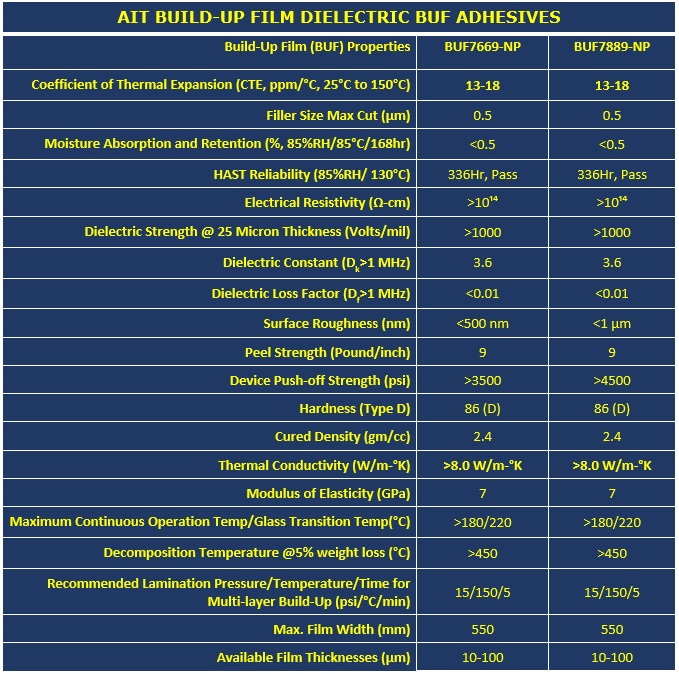
AIT BUF7660 and BUF7880 are two of the next generation build-up dielectric film adhesives that offer some options before the glass core substrate development is completed. These novel build-up dielectric adhesives offer the low CTE to of 18-22 ppm/ºC to match that of the organic core and copper traces and vias to minimize the shear and tensile stress and thus minimizing the warpage even for larger area panel-based substrate production. The following table is an extraction of the key characteristics of the build-up dielectric adhesive that is available for large panel of 600mm with better than 2µm TTV.
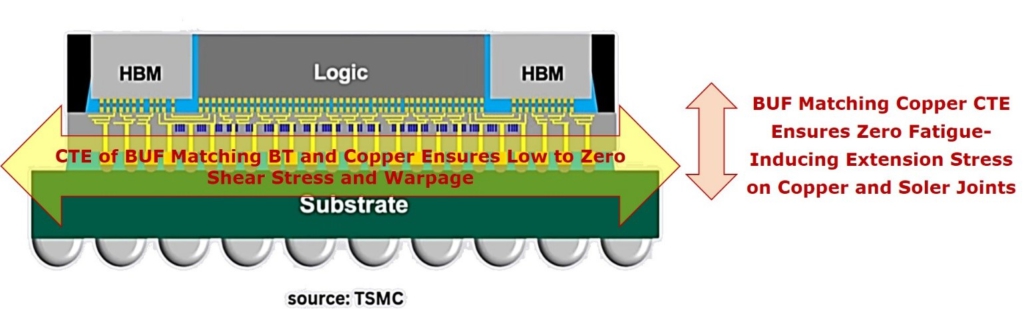
Glass Core Substrate Benefits Most with New Generation of Build-Up Dielectric Film CTE Closing the Gap of Glass CTE and Copper CTE
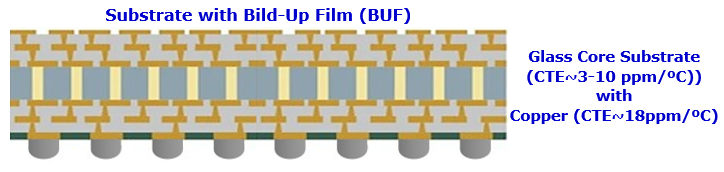
Glass core substrate provides many potential benefits if the inherent processing challenges can be met. In the case of build-up dielectric film, traditional ABF may also need to modified to meet the challenge in terms of stress management facing the challenge of glass CTE having CTE from 3-10ppm/ºC depending on the glass composition.
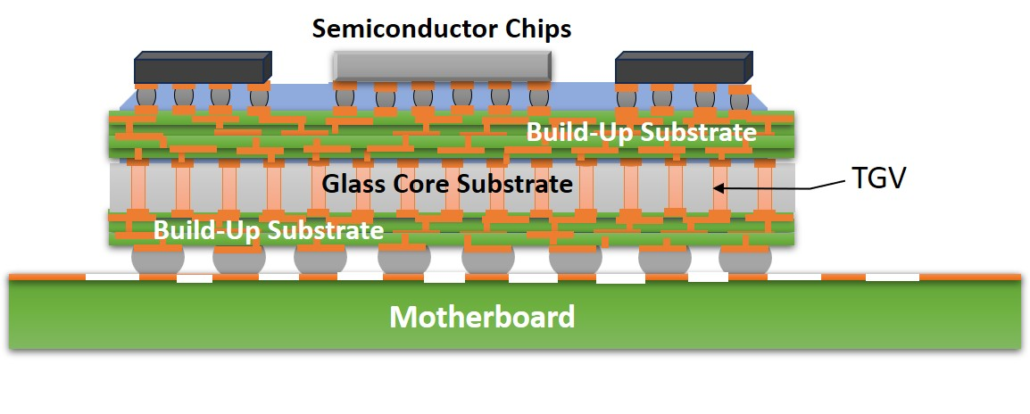
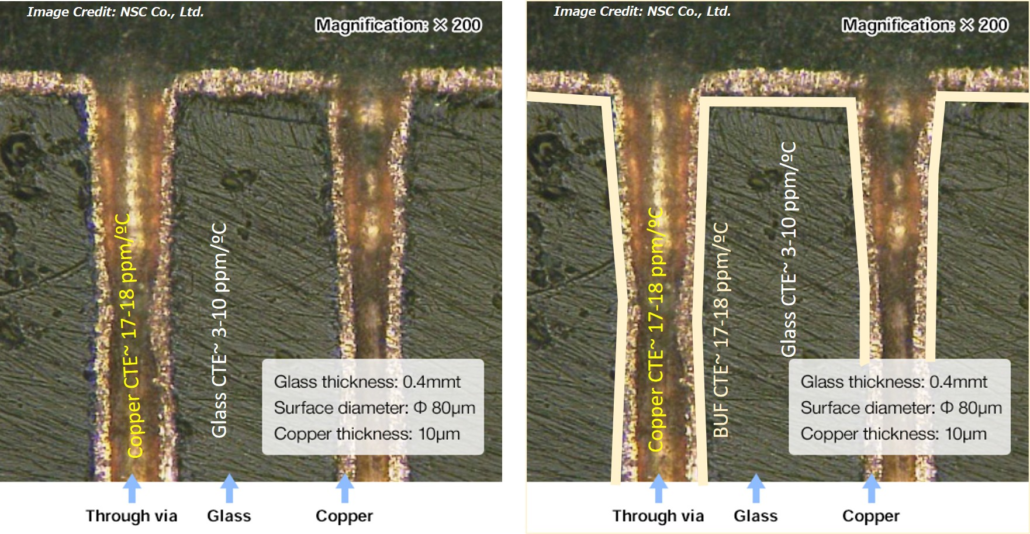
Copper on Through Glass Via (TGV) May Benefits with a Stress Absorbing Buffer Made of the BUF
The more than 10ppm/ºC in CTE differential between the glass core TGV and the direct plated copper could generate stress-induced cracks on the corners and edges of TGV and copper fatigue cracking of the copper plating.
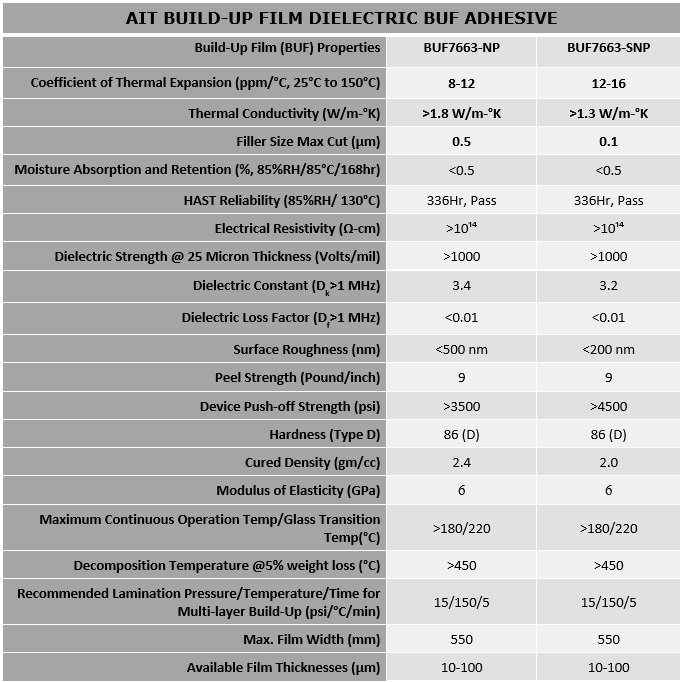
>8 W/m-ºK Thermal Conductivity of AIT Build-Up Film (BUF7669-NP and BUF7889-FP) Coupling with 18 ppm/ºC CTE Ensures Lowering Localized Heating for Longer Device Useful Life and Reliability
With the increase use of heterogenous integration, logic and processing chips are directly next to the lesser powered memory modules. More heat generated must be quickly dissipated across and through the build-up substrate. In providing the needy thermal dissipation, AIT with over 30 years of using diamond-based adhesive for supercomputers have developed the diamond filled build-up film dielectric adhesive to provide more than 8 W/mºK thermal dissipation capability. BUF7660 and BUF7880 are filled with nano-based and micron-based diamond crystallites to form BUF7669-NP and BUF7889-FP.
Increasing the thermal dissipation comes also the increase in dielectric constant. Thus, the choice in balance of data communication efficiency must be weighed and balanced with the heat dissipation during the build-up film substrate and packaging considerations.
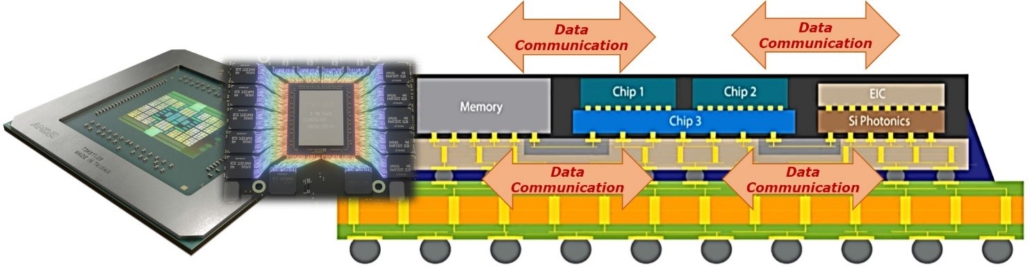
Low Dielectric Dk of <2.8 of AIT Build-Up Film Ensures Unparalleled Fast and Non-Distorted Data Communications Between Chips within A Chiplet Mounted on the Substrates
In meeting the fast communication speed for 5G and 6G modules, build-up substrates with or without core substrates are preferably with low dielectric constant and loss below 3.0 and 0.005 at the mmWave frequencies. This challenge can only be met with dielectric without the use of inorganic fillers such as silica to control the CTE for stress consideration. Through the use of novel molecularly structural engineering, AIT scientists have successfully created dielectric build-up adhesive film that matches the CTE of copper and BT core substrate at 18-22 ppm/ºC without using highly loaded silica. These high-temperature capable dielectric polymer adhesive films respond to mmWave frequency with low dielectric constant of 2.6-2.8 and less than 0.005 dielectric loss.